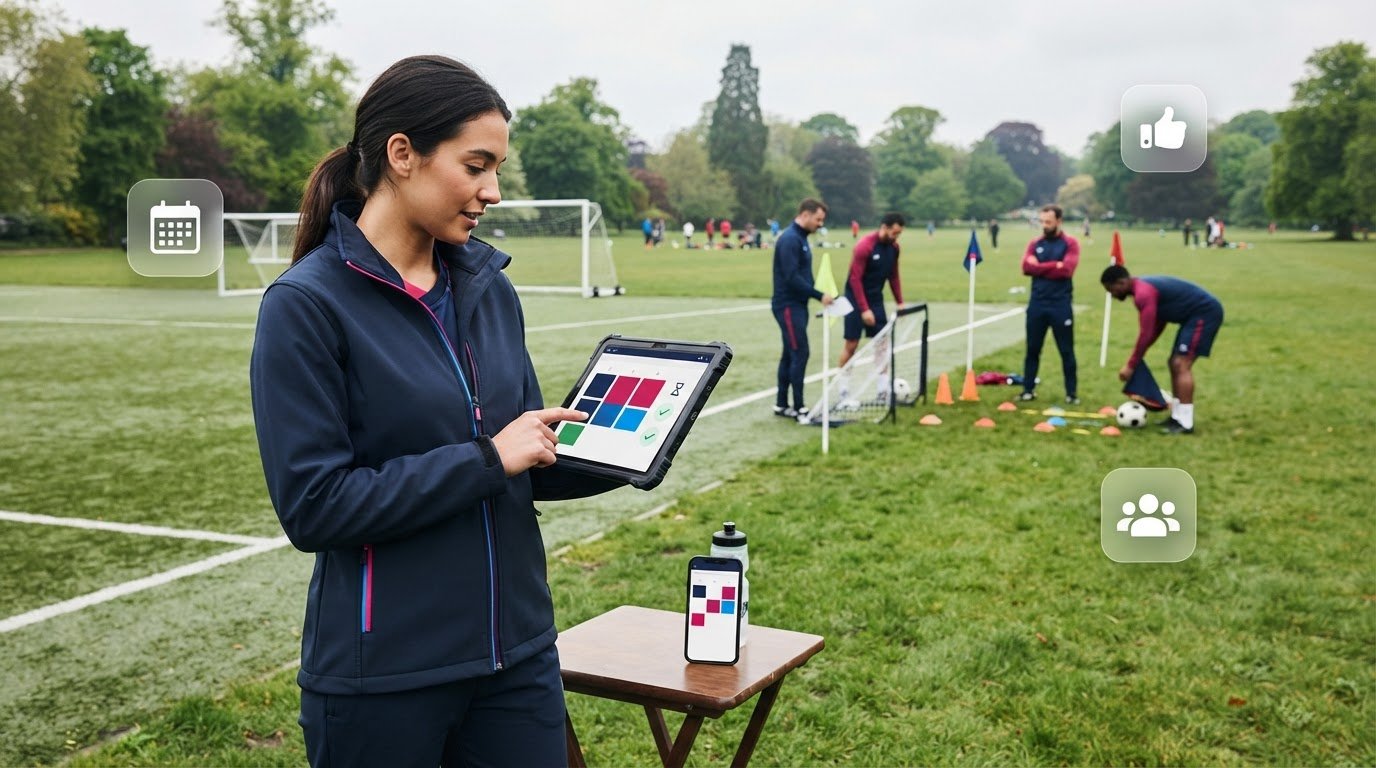

What if managing several sports programmes didn’t mean creating a separate system for each one? When you manage multiple sports activities, the goal isn’t to make every programme identical. It’s to build shared foundations while keeping the details that make each activity work.
If schedules, participant information and operational updates sit across different tools, routine coordination can quickly become repetitive. Each sport may have its own requirements, and as provision grows, it becomes harder to see what’s happening across the organisation without losing programme-level detail.
This article sets out a repeatable way to bring people, schedules and information into clearer alignment. You’ll learn how to standardise processes that can be shared, adapt those that need to differ, and reduce avoidable administration. It also explains how connected booking, staffing, participant and payment workflows can support oversight, with reporting to help management teams see the bigger picture.
Key Takeaways
- Map your programmes, people and participant journeys to spot where coordination is becoming difficult.
- Use a shared framework to manage multiple sports activities while preserving the details each programme needs.
- Decide which records and processes should be consistent across the organisation and which should stay activity-specific.
- Set a weekly rhythm for planning, checking readiness, managing changes and recording decisions with clear owners.
- Connect activity management, registration, participant accounts and staffing workflows to strengthen oversight as provision grows.
Why managing multiple sports activities becomes difficult as provision grows
Multi-activity management means coordinating programmes, people and participant journeys across an organisation’s provision. That includes the route from discovering an activity and booking a place to receiving practical updates and attending. The challenge isn’t simply that more sessions appear on the timetable. Every additional programme brings information, decisions and handovers that someone must keep aligned.
A coordinated multi-activity operating model gives every programme shared ways of working while retaining the details that make each activity distinct. Organisation-wide oversight helps managers spot what needs attention, while programme-level information lets activity teams plan delivery accurately.
What counts as multiple sports activities?
Provision might include weekly sessions, structured courses, clubs, camps, holiday activity programmes and one-off events. These may serve different audiences, run at different times or locations, and rely on different delivery teams. A term-time course, for example, may require a sequence of bookings, while an event may involve a single registration and a concentrated staffing plan.
Activities can share essentials, such as participant contact details and a clear record of bookings, without having identical requirements. The Youth Sports Overview offers broader context on youth sport and participation. For providers, the operational task is to organise each programme around its format and delivery needs.
Where does coordination start to break down?
Coordination often starts to falter when the operational picture is split across separate tools. Bookings may sit in one system, staff plans in a spreadsheet and participant details in another record. Teams then re-enter information to create lists or plans. Each handover creates another chance for details to be missed, duplicated or left out of date.
Changes expose these gaps. If a venue, time or staffing assignment shifts, the update may need to reach administrators, activity leads and participants. When each group relies on a different channel, it’s harder to know who has received the latest information and whether related plans have been updated. A change in one programme might also affect shared resources, such as staff or facilities, without being visible to those coordinating the wider schedule.
The result is more than extra administration. Managers can struggle to answer practical questions: which activities have upcoming delivery needs, where are staffing arrangements unresolved, and are participant records ready for the next session? If answering means checking several sources and reconciling conflicting details, decisions take longer and confidence falls.
Clear oversight doesn’t mean forcing every activity into one template. It means giving managers a reliable view across provision, with enough programme-level detail for each team to act. As the number of activities grows, making that distinction becomes central to how you manage multiple sports activities without losing control.
Build one management framework for different sports activities
A practical framework gives every programme a dependable route from initial planning to review. It doesn’t require identical delivery. Instead, it makes shared information, handovers and responsibilities clear, so activity leads can focus on the needs of their programmes.
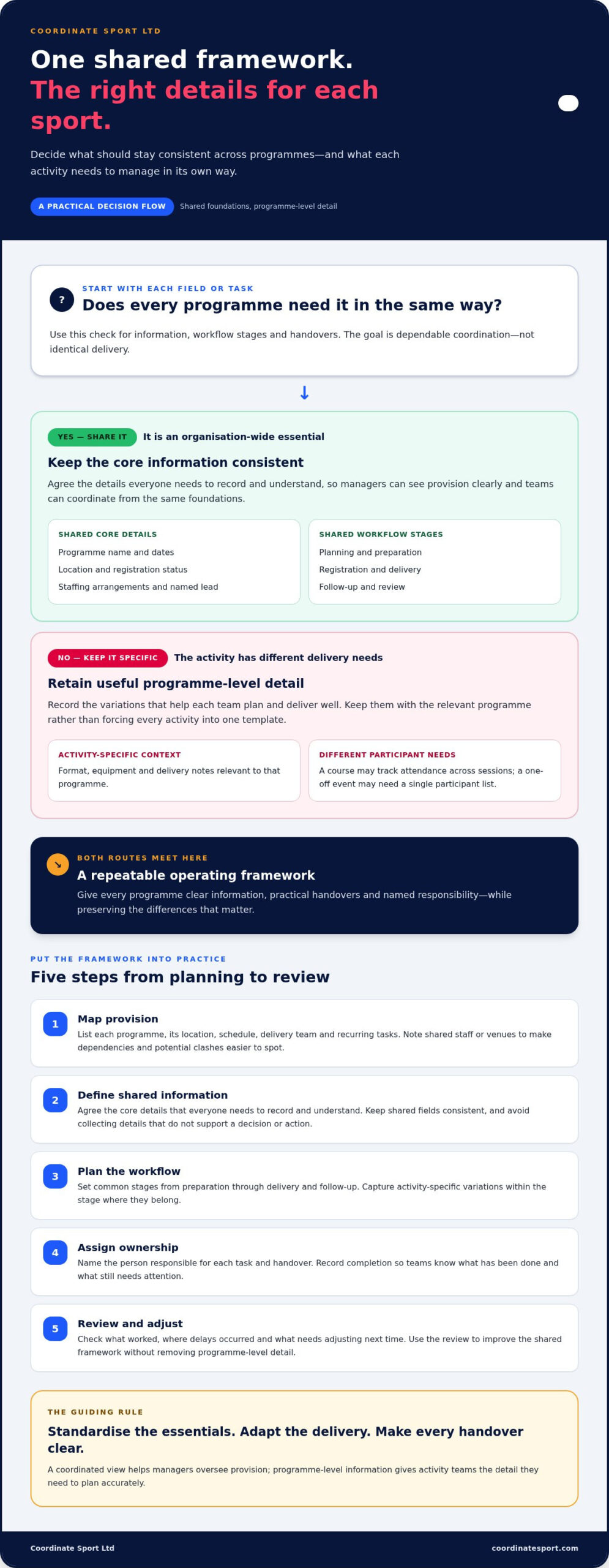
Map provision, agree shared information, plan the workflow, assign owners and review what happened. This creates a repeatable framework for coordinating activity without erasing programme differences.
- Map provision: List each programme, its location, schedule, delivery team and recurring tasks.
- Define shared information: Agree the core details everyone needs to record and understand.
- Plan workflows: Set the common stages from preparation through delivery and follow-up.
- Assign ownership: Name the person responsible for each task and handover.
- Review: Check what worked, where delays occurred and what needs adjusting next time.
Map activities, people and recurring tasks
Start with a working inventory, not a complex manual. For each session, course, club, camp or event, note its location, dates, delivery roles and key preparation tasks. Include recurring actions such as opening registration, confirming staffing, preparing participant information and communicating changes. Then mark dependencies, such as a staff member or venue used by more than one programme. This makes clashes and shared pressures easier to spot early.
Standardise the workflow without flattening programme differences
Set common stages for planning, registration, delivery and follow-up, then capture any activity-specific variation within the relevant stage. Every task needs an owner, a clear handover and a record of completion. A course might need attendance tracked across its sessions, while a one-off event may need a single participant list. The shared framework provides consistency; programme notes preserve the details teams need to deliver well.
Separate organisation-wide essentials from programme-level detail. Core information could include the programme name, dates, location, registration status, staffing arrangements and a named lead. Activity-specific context might cover the format, equipment or delivery notes relevant to that programme. Keep shared fields consistent, and avoid collecting details that don’t support a decision or action.
For example, a provider planning a holiday activity programme can map dates, venues, delivery roles and registration tasks first. The team can then use the shared workflow to prepare bookings, check participant information, confirm staff assignments and brief the activity lead. Programme-specific requirements sit alongside those common steps. After delivery, the owner records what was completed, flags issues and feeds useful changes into the next planning cycle. The same sequence can guide other programmes while retaining their own details.
Keep the framework visible and easy to follow. A connected activity management platform can bring planning, registration, participant records and staffing coordination into a more joined-up workflow, giving teams a practical foundation for applying the process consistently.
Choose what to centralise and what to manage by activity
Good oversight doesn’t mean making every programme operate in exactly the same way. It means centralising the information managers need to coordinate provision while giving activity leads control of the details that shape delivery. This distinction helps you manage multiple sports activities with a consistent view, without forcing a course, club and holiday programme into one rigid template.
Use a simple test: if information needs to be compared or acted on across programmes, keep its format consistent. If it changes how a particular activity is delivered, retain it as programme-level context. Booking, staffing and participant information can still connect to the relevant activity, giving managers an organisation-wide view without losing useful detail.
| Centralise | Keep flexible | Reason |
|---|---|---|
| Programme names, owners and status labels | Session formats and course structures | Shared terms make provision easier to compare; delivery formats vary by activity. |
| Core participant and booking details | Activity-specific participant notes | Consistent records support coordination; relevant context helps teams deliver. |
| Staff assignment visibility | Programme-level staffing plans and delivery notes | Managers can see resource commitments, while leads organise their programme. |
Which information should be consistent across programmes?
Agree standard naming for programmes and locations, a clear owner for each activity, and shared status labels such as planned, open for registration or ready for delivery. Keep core participant and booking details in a consistent format too. When teams use the same definitions, managers can interpret reports across provision more confidently instead of first decoding different labels or record structures.
Where should activity-level flexibility remain?
Preserve variation where it affects delivery. A weekly session, a course with linked dates and a camp running to its own schedule may need different planning details. Keep those requirements and delivery notes visible to the relevant team, but attach them to the shared programme record and workflow. Teams then retain control of their programme without creating a separate system for every activity.
Apply the same principle to staffing and bookings. Managers benefit from seeing which activity each assignment supports and how registrations relate to programmes; activity leads need the practical details for their own delivery. Connected records make those views complementary, not competing. They also help avoid maintaining separate versions of participant or staffing information just to answer different questions.
Review the boundary when a process creates confusion. If teams can’t compare activity status or locate the responsible lead, standardise the shared field. If a common format hides a genuine delivery difference, add a programme-level variation instead. The aim is a reliable organisation-wide picture with enough context for each team to make sound operational decisions.
Put a weekly rhythm in place to keep activities on track
A steady weekly cycle turns coordination into a routine rather than a last-minute scramble. Give the team set points to plan upcoming activity, check readiness, manage changes and review delivery. Keep the rhythm focused: a shared view of priorities, a short check-in and a record of decisions are often more useful than a long meeting without clear actions.
Use a readiness checklist for each programme so activity leads and managers can spot gaps before delivery. Keep it practical:
- Are dates, locations and schedules current?
- Are staff assignments confirmed and responsibilities clear?
- Are registrations and participant details ready for the team?
- Have relevant people received operational updates?
Record each issue with an owner and next action. This keeps follow-through visible across activities and helps you manage multiple sports activities with fewer loose ends.
Plan upcoming sessions and programme changes
At the start of the cycle, scan upcoming dates, capacity, registration status and decisions that need attention. Ask activity leads to confirm their responsibilities and handover points, especially where another team needs to act next. Check for shared staff, locations or resources that could create a conflict. Flagging dependencies early gives managers time to resolve them before plans are disrupted.
Review delivery and act on what the information shows
After delivery, compare what was planned with what took place. Note missed actions, schedule changes, staffing issues or participant questions that need follow-up. Review participation and operational signals in context, rather than imposing a benchmark that may not suit every programme. Assign each follow-up to an accountable owner, then carry unresolved actions into the next planning cycle.
Keep check-ins focused. Managers can scan the organisation-wide view, then ask activity leads to raise exceptions, such as a staffing gap, a registration concern or a change affecting another programme. Record the decision, who owns it and when it needs attention. This creates a useful handover between the people overseeing provision and the teams delivering each activity.
A simple weekly dashboard can show upcoming activities, readiness status, registration progress, staffing assignments and open actions. Use it to direct attention, not to recreate a full reporting pack. The aim is to answer at a glance what is ready, what has changed and where a decision is needed. Connected activity, booking and staffing information can make that view easier to maintain.
Build this rhythm into your existing processes, then refine it as your provision changes. Explore connected activity management to support coordinated planning, bookings and staffing across programmes.
Connect the workflow with sports activity management software
A clear framework gives your team a consistent way to work. As activity volume grows, spreadsheets, booking tools and separate staff records can make that framework harder to keep in view. Information may need to be copied between systems, and managers can spend time piecing together updates before they see what needs attention. Connected sports activity management software can help provide stronger oversight.
The aim isn’t to add technology for its own sake. Start with the programmes and recurring workflows you’ve already mapped, then identify where connected information would help teams act with confidence. A joined-up system can link activity schedules with online registration, participant accounts and staffing assignments, giving relevant people a clearer operational picture.
What should a joined-up management platform help you see?
Managers need to understand how the moving parts relate. A schedule shows what is due to run; registration information indicates who has booked; participant records give teams access to relevant details; staffing assignments show who is allocated to deliver. When these sit in a connected workflow, it’s easier to view each programme and its operational status without treating every record as an isolated task.
Participant-facing processes matter too. Branded booking portals can present activities and registration in a consistent way, while online payments and fee collection can sit alongside booking information. This creates a more coherent path from a participant’s booking to the information teams use to prepare delivery. Each activity can retain its own schedule and requirements within that wider view.
Reporting then helps management teams review provision across programmes. They can draw on activity, booking, participant and payment information to understand what is taking place and where follow-up may be needed. Reports can also support information needs for funders and commissioners. Keep the focus on useful questions: which programmes are running, what has changed, and what requires a decision?
Move from separate processes to a coordinated system
Make the transition practical. Begin with your mapped activities, the people involved and the handovers that matter. Identify where a registration needs to inform a participant record, where a staffing assignment needs to connect to an activity, and which details managers need across the programme portfolio. This keeps the system aligned with your operating model instead of asking teams to adapt to a generic process.
Then bring the relevant workflows into one operating picture. Activity management provides the structure; booking and registration connect participants to provision; account management keeps participant information accessible; and staffing coordination helps teams see assignments across activities or locations. With shared information, managers gain oversight while activity leads retain the context they need to organise delivery.
If your current tools make it difficult to follow an activity from registration through staffing and delivery, a connected platform is a practical next step. Explore Coordinate Sport’s activity management platform to see how connected workflows can help you manage multiple sports activities with greater clarity as provision grows.
Make your next step a more connected one
Growth doesn’t have to mean adding another layer of admin every time a programme changes. Choose one recurring handover to improve first: make the information clear, keep ownership visible and give teams a reliable way to coordinate their next action. Small operational improvements can create a stronger foundation for future provision.
To manage multiple sports activities with confidence, look for a system that supports how your organisation works across its programmes. Coordinate Sport brings activity management, bookings and participant accounts together, with staffing coordination designed for sports activity providers. Its reporting tools help management teams, funders and commissioners understand provision.
Explore how Coordinate Sport can help you manage activities, bookings and staffing, and take the next step towards a clearer operating rhythm. Your programmes can grow with greater coordination and control.
Frequently Asked Questions
How do you organise multiple sports activities at the same time?
Start with one shared view of upcoming activity, then make each programme lead responsible for keeping its details current. To manage multiple sports activities, mark dependencies such as staff covering more than one session or a venue used by different programmes. For example, if a staff member is assigned to two activities at overlapping times, flag the clash for a manager to resolve before confirming plans with participants.
Can one system manage different sports programmes and activity formats?
Yes. One system can support different programmes when it accommodates their distinct booking and delivery details. A weekly session, a multi-date course and a holiday camp may need different schedules or registration information, but managers can still oversee them as part of one provision. Coordinate Sport supports online booking and activity management for sessions, courses, clubs, camps, holiday activity programmes and events, alongside participant accounts and staffing coordination.
What is the best way to coordinate staff across several sports activities?
Coordinate staff against the activity, date, location and assignment, then give each lead a clear view of who is responsible for delivery. Check shared staff commitments before confirming allocations, particularly when programmes run at different locations or times. If an assignment changes, update the relevant record and tell the people whose plans are affected. A staffing application designed for sports activity providers can help organise assignments and deployment across activities.
How can a small activity provider manage several programmes without extra admin?
Keep the operating routine lightweight: use one place for key programme information, reuse templates for repeated tasks and avoid entering the same detail into multiple records. For instance, prepare a standard launch checklist for each new course, then add only the dates, lead and activity-specific requirements. Online registration, participant accounts and payment collection can also bring related administration into connected processes, helping a small team keep oversight without adding unnecessary steps.
Should every sports activity use the same booking and registration process?
Use the same basic process where it helps participants and staff, but adapt the details to the activity. A one-off event may need a single booking, whereas a course may need registration for a series of dates. Keep shared information and familiar steps consistent, then include activity-specific questions or scheduling details where they serve a clear purpose. This gives participants a recognisable booking experience without making every programme follow an unsuitable format.
How often should managers review multiple sports activities?
Review activity at a regular weekly check-in, then add a focused review when a programme is launching, changing location or approaching a busy delivery period. The weekly view helps managers catch emerging issues, while an event-specific check can resolve immediate dependencies such as an unconfirmed assignment. Keep reviews proportionate: discuss exceptions and decisions rather than reading every record aloud. Set the next review date and record who will follow up.
What information should a sports activity manager track across programmes?
Track the information needed to make operational decisions: activity name, dates, location, lead, booking status, participant records, staffing assignments and unresolved actions. Include payment status where it helps the team understand registration or fee collection. Keep delivery notes linked to the relevant programme rather than mixing them into organisation-wide summaries. A consistent view of these details helps managers see which activities are ready and where a decision or follow-up is needed.